
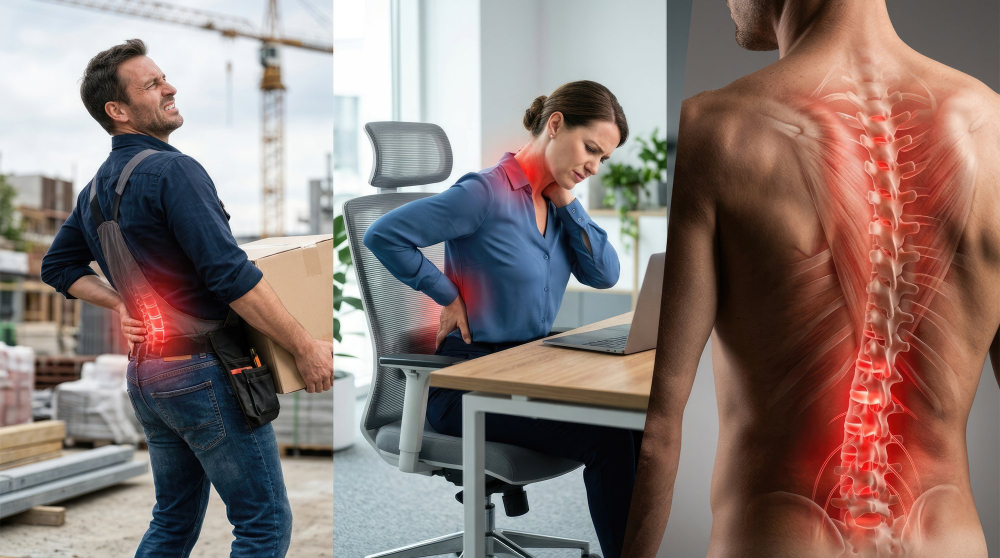
What Is a Slip Disc?
A slip disc, also called a herniated disc, happens when the soft part inside a spinal disc pushes out. This disc sits between the bones in your back. When it slips, it can press on nerves. As a result, you may feel pain, numbness, or weakness. Slip disc symptoms often include sharp or burning pain. According to the World Health Organization, back pain is a leading cause of disability worldwide. In many cities, people visit doctors for back pain causes like slip disc.
What Is a Muscle Strain?
On the other hand, a muscle strain means a muscle or tendon in your back is stretched or torn. This can happen from lifting something heavy or moving the wrong way. Usually, muscle strains cause soreness, stiffness, or mild swelling. Unlike a slip disc, muscle strain pain often feels dull or achy. Most people recover from a muscle strain with rest and gentle care.
Key Differences Between Slip Disc and Muscle Strain
Although both can cause back pain, there are clear differences. For example, a slip disc affects the discs between your bones, while a muscle strain affects the muscles or tendons. In addition, the type of pain and how it starts can help you tell them apart. Below are some key points:
Symptoms Comparison
It helps to know the main symptoms of each. For slip disc symptoms, you may notice:
In contrast, muscle strain symptoms often include:
Sometimes, both can cause pain when you move. However, slip disc pain may get worse when you cough or sneeze.
Causes and Risk Factors
Both slip disc and muscle strain have different causes. For a slip disc, common causes are:
Meanwhile, muscle strains often happen due to:
Additionally, risk factors like being overweight, lack of exercise, or having a job with heavy lifting can increase your chances of both conditions.
Diagnosis Methods
Doctors use several ways to find out if you have a slip disc vs muscle strain. First, they ask about your symptoms and medical history. Next, they do a physical exam to check your movement and pain. Sometimes, they may order tests such as:
For muscle strain, imaging is rarely needed unless the pain is severe or lasts a long time.
Treatment Options
Treatment depends on the cause and how bad the pain is. For slip disc, doctors may suggest:
For muscle strain, most people get better with:
In many cases, both conditions improve with time and care. However, slip disc may take longer to heal.
Prevention Tips
You can lower your risk of slip disc and muscle strain by making healthy choices. For example, try these tips:
In addition, stretching before activity can help prevent muscle strain.
When to See a Doctor
Sometimes, back pain needs medical attention. You should see a doctor if you have:
Early care can help prevent problems from getting worse. If you live in a city with many clinics, you can find help nearby for back pain causes.